
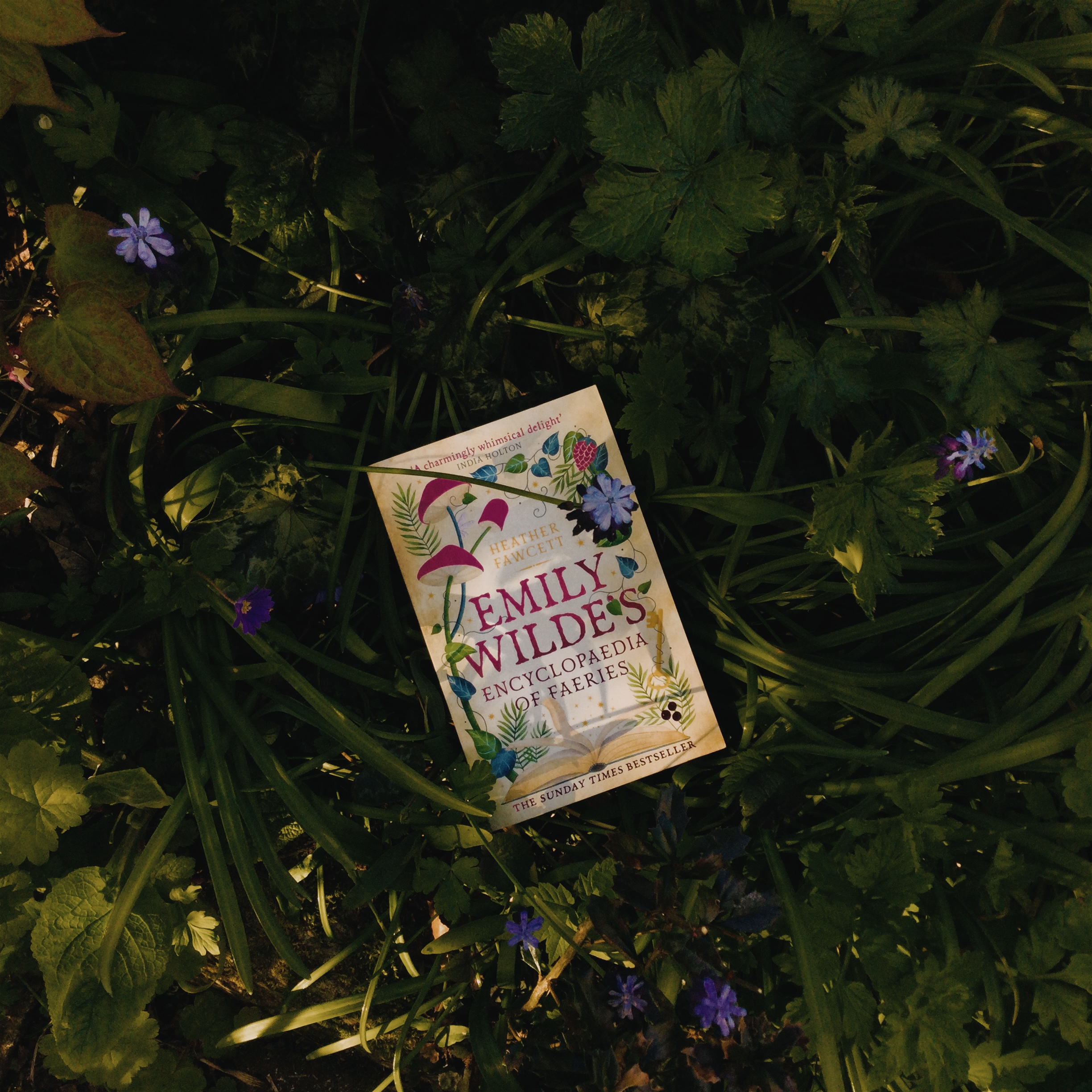
There was something about the stories bound between those covers, and the myriad species of Folk weaving in and out of them, each one a mystery begging to be solved. I suppose most children fall in love with faeries at some point, but my fascination was never about magic or the granting of wishes. The Folk were of another world, with its own rules and customs—and to a child who always felt ill-suited to her own world, the lure was irresistible.
“Charming” is a descriptor that gets bandied around quite liberally - especially now with the welcome surge in Cottagecore and Cozy Fantasy, and with good reason as there are myriad things (see: aforementioned sub-genres) that fit the criteria. There’s no denying that slower paced stories with low stakes, sleepy drama, and seemingly endless cups of warm beverages sipped around crackling fires couldn’t possibly be described as anything else; but I suppose at the very heart of it, it all depends on what you, in particular, find charming.
Personally? A recalcitrant, cantankerous, bedraggled academic with fewer social skills than Boo Radley, tromping around the glacial iciness of a remote, Scandinavian-esque island in search of the illusive and uncatalogued Fae with the preening, tousled-haired rake in tow who clearly worships the ground she walks on whilst managing to be both loucher and brattier than Cardan Greenbriar, the crown prince of hellion (impish?) behaviour - a feat I was unaware was possible, fits the bill quite nicely. In fact, I would go as far as to say that Emily Wilde’s Encyclopaedia of Faeries reads like it was written just for me, from its diary entry, epistolary narrative style, to the ceaselessly grumpy diarist penning it.

But I’m not afraid to admit that this was in no way what I was expecting. Having read the blurb and been taken in by the whimsical cover art, I, very wrongly, assumed Heather Fawcett’s exploration of the pernicious fae would be one of warmly limned forests dappled with the impossible glitter of the ethereal in the sun-sweetened heights of summer as two mild-mannered scholars bargained with the realm of Faerie for its secrets as they quaintly fell in love ← imagine I said that all in an obnoxiously wistful tone. In my head, Emily Wilde’s Encyclopaedia of Faeries would be like the opening scene of Ridley Scott’s Legend, as Princess Lili skips and twirls her way through the ancient, sparkling meadows of the enchanted forest, basking innocently in the glory of magic-touched nature.

...
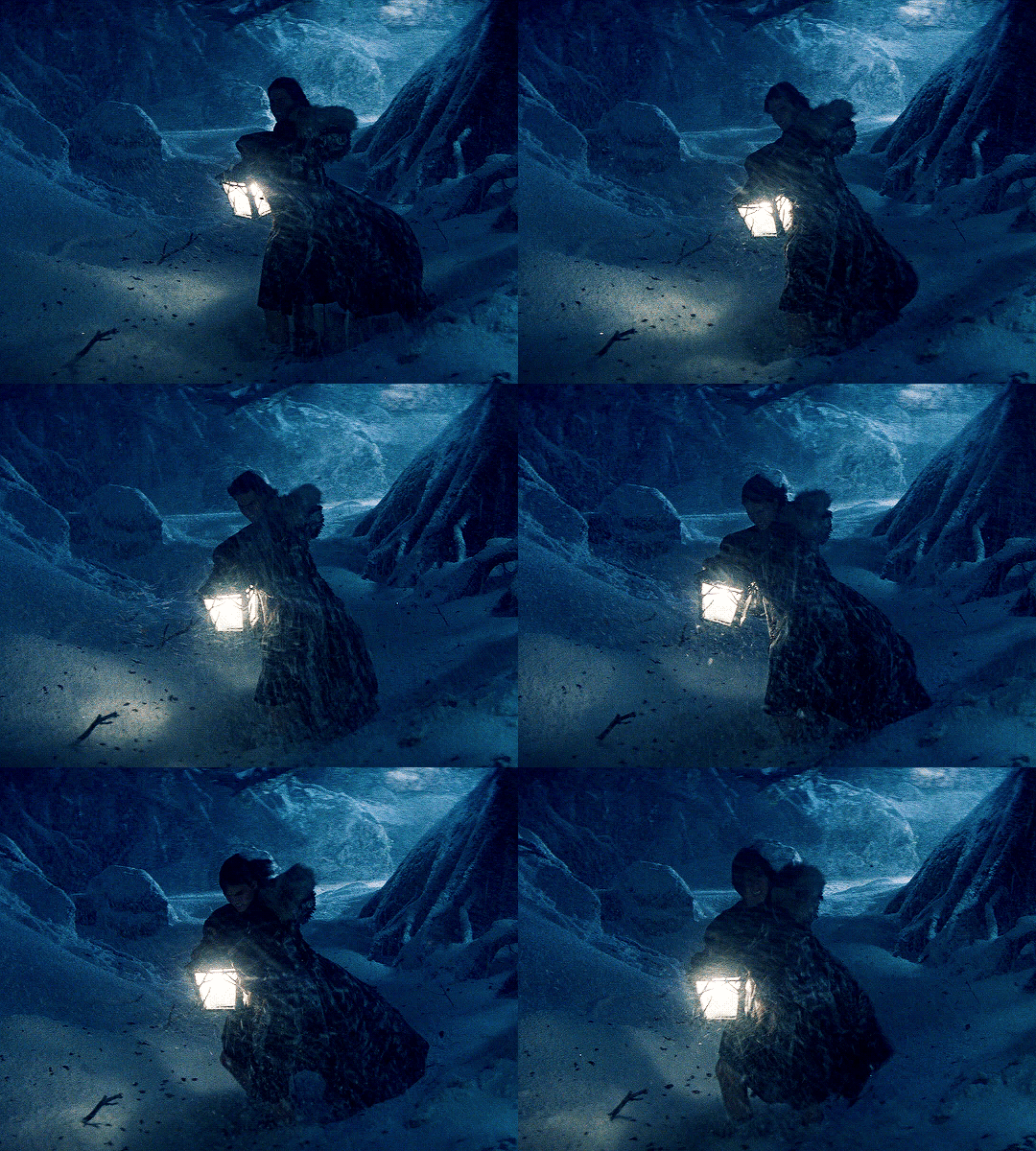
When really it’s more like the aftermath of the goblin, Blix shooting the unicorn and the land plunging into an eternal winter as a wicked (and confusingly hot) fairy king reclaims his rule and reluctant bride to be.
...
And quite frankly, I couldn't possibly be any more delighted.
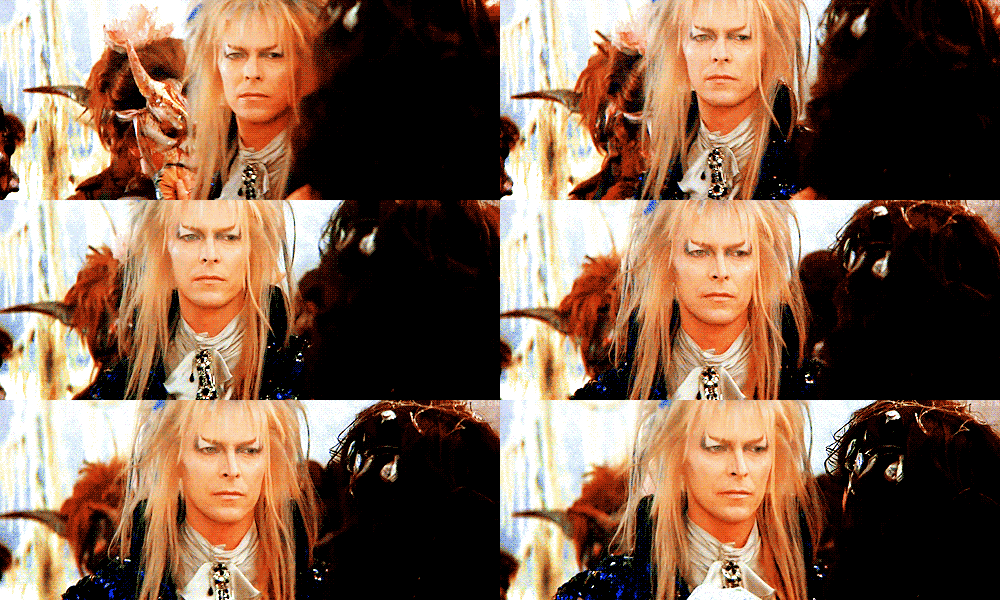
To be fair, though, this may not be every reader's reaction, due to the cover of EMEoF being very misleading, practically the poster child for "Don't judge a book by its cover". Because the story isn't the expected romp through the bright and fanciful faerie lands where nothing bad happens and everything's a delight, it's quite the opposite, in fact: cruel, vicious, and bitter to the touch, everything the fae of the oldest, truest stories claim to be, where mortals are almost always in danger of being spirited away and gobbled up, be it physically or mentally. Which, to be extremely clear, is how I love them best. Give me the Sluagh, the Kelpies, and the Redcaps; take me to the Unseelie Court where the humans are so drunk on goblin fruit they dance until they die; make me complicit in a pact with the fairy devil and let me suffer the heady consequences. I’m the one who would’ve taken Jareth up on his deal and reigned over the Goblin kingdom by his side, I’m the one who would’ve told Tom Cruise to take a hike and proceeded to plonk myself down on Darkness’ lap to address him as Lord and Master - but not really, we all know a simp when we see one. Which perhaps should’ve meant EWEoF would be too soft for me, as it never quite pitches itself to these particular depths of fae depravity, perching on the periphery of the foul and fury so innate to the their kind, but it does have a dark sweetness ribboned throughout it, licking it at the edges. This story could so easily have been another addition to the sugary, all nibble, no bite catalogue of fae fiction that’s saturating the publishing industry (sounds like a burn, so not a burn, I love this stuff), but from the moment Emily Wilde steps off the boat onto the frigid lands of Ljosland, malevolence is immediately peering out at her, testing the tenderness of her flesh, sizing her up as a snack or a full meal. And her approach to this measuring is just as you would expect from an academic out in the field: recklessness parcelled as inquisitiveness, self-preservation out the window and a few houses back, and an unparalleled wealth of baffling yet brow-furrowingly endearing arrogance. Academics really are the dumbest smart people you’re likely to meet, and Emily Wilde is no exception, which is the main reason why this book works so well: she isn’t some tripping ingenue who can’t string a whole sentence together, making you question how she's survived so long without expiring in a freak paper cut accident. She’s exceptionally smart and her qualifications reflect that implicitly, but she is an absolute disaster. Messy and antisocial, curt and painfully awkward, so smart within her field but oblivious to everything else (especially Wendell Bambleby; we'll get to him), and it rings cuttingly true of the eternal student. Give them a subject and they'll explore it to its most obscure recesses, but ask them to perform a basic task like toasting bread? Absolute disaster. A fête of bewilderment. A very burnt slice of bread and a hangry academic who's probably wandered off already to scribble down an illegible note on the proprietary quandary of stinky bee feet (real thing). This is Emily Wilde to a tee, with a footnote of just wanting to be left the bloody hell alone so she can write her damn encyclopaedia without having to deal with every day things.

"Things" such as Wendell Bambleby, her self-appointed best friend and academic rival, the flirty thorn in her side, the sovereign of sulk, the baron of brattiness, the man who cannot walk past a mirror without admiring himself and would rather be in bed than doing any actual work. The man who quite clearly worships the ground Emily Wilde stomps upon and she has no bloody clue about (see: above academic cluelessness). But we do, because it's outrageously obvious. I knew before he even stepped one polished foot upon the page that he was a lovesick idiot for our ornery protagonist, it's clear as day in his first missive delivered to her temporary home, with his teasing wit, the playfully nudging way he speaks of her and their life back in England, and the adoring doodle of her grumpily hunched over her desk sketched in the margin of said letter, contemplating the universe with a scowl on her face.
My dear Emily, it began. I hope you're settled comfortably in your snowbound fastness, and that you are merry as you pore over your books and collect a variety of inkstands upon your person, or as close to merry as you can come, my friend. Though you've been gone only a few days, I confess that I miss the sound of your typewriter clack-clacking away across the hall while you hunch there with the drapes drawn like a troll mulling some dire vengeance under a bridge. So woebegone have I been without your company that I drew you a small portrait—enclosed.
I glared at the sketch. It showed what I considered a highly unfaithful rendering of me win my Cambridge office, my dark hair pinned atop my head but terribly dishevelled (that part, I admit, is true—I have a bad habit of playing with my hair whilst I work), and a fiendish as I scowled at my typewriter. Bambleby had even had the gall to make me pretty, enlarging my deep-set eyes and giving my round face a look of focused intelligence that sharpened its unexceptional profile. No doubt he lacked the ability to imagine a woman he would find unattractive, even if he had seen said woman before.
I was certainly not amused by the caricature. No, I was not.
This black cat of man, this himbo with zero impulse control, this absolute nightmare vanity vacuum couldn't be anything less that infatuated and deeply devoted to his partner in academic crime. And, reader, whoever you are, I need it known and indelibly printed on the record, that I love this idiot with my whole - just as idiotic - heart; he's the vapid monster I didn't know I'd been looking for. "But why?" you may be wondering, as I haven't exactly talked him up, quite possibly talked him down, and all I can say is that Wendell Bambleby is a hero of a different colour.

He's no brooding "alpha" with communication issues and the emotional intelligence of a discarded watermelon rind. No, he's an absolute menace who pouts and whines when the world doesn't immediately genuflect at his obviously perfect feet, he's a fiend before the devouring the breakfast he will in no way have made for himself - that's what academic underlings are for, he's an unstoppable flirt and a bit of a slut (endears him greatly to me), a master of "I'll do it because you made feel bad about not doing it but I'm going to let you know the whole time that I resent you implicitly for making me do it". He's the definition of black cat behaviour whilst somehow also being the human equivalent of a golden retriever, the perfect counterpart to Emily's stalwart adherence to rules, methodology, and moral code (although this is easily swayed by scientific curiosity), and an all-round insufferable egomaniac who shows his love for Emily in almost undetectable ways. But they're there, smugly and smirkingly glinting through every petty argument, every miserable trudge through the snow (Bambleby's most loathed natural substance), every baffled reaction to her bewilderment to basic human behaviour. I wouldn't be surprised if the best tree (and it will be the best, Wendell will have checked) in Ljosland had the letters E+W surrounded by a heart carved into its bark, a testament to what a crushing disaster this man is for Emily "Refuses to brush her hair because it's a total waste of time" Wilde.
And I'm obsessed with it. With them.

With how Heather Fawcett refuses point blank to stop them bickering throughout the entire story: when Wendell gazes adoringly at Emily, she glares back; when she asks him to be serious and do some work, he doubles down on his silliness; and when they're in true danger and everything's awful, they'll rally together and still make time in between near fatal blows to verbally jab at one another. And they do find themselves in danger quite often. Like I mentioned at the beginning of this review, EWEoF is no blushing damsel of a story, it's full of life-sucking changelings, lesser fae who'll roast you on a spit even if their bellies are full, and ancient king-harbouring trees that’ll pull you down into their earthy depths by the roots. The fae of Ljosland aren’t the sanitised version Disney has spent so many years foie gras-ing down our throats, they’re the creatures of mischief and malice so very dear to my heart, slinking and bedevilling their way across the landscape, purloining unsuspecting humans at will. And what a landscape it is.
World-building is, in my opinion, a necessity in the fantasy genre; from magic realism to high fantasy, there has to be a tangibility to the world the author invites you into. It has to be detailed and sensory, so vividly imagined it becomes a real place to the reader. Without these things it’s difficult, sometimes impossible to suspend disbelief, something required to partake in the genre, and Heather Fawcett not only managed to build her world in harsh clarity, she shaped it in a way that defied the impossible and tugged at the possible. As if Emily Wilde’s accounting of her and Wendell’s time together is something she found inside an old trunk in a distant relative’s attic, buried under Christmas decorations, and the eternally wintery, fae-haunted terrain of Ljosland truly exists somewhere in Scandinavia. That believability can be felt in the precise descriptions of the town, its community, the bitterness of the weather, the mundane tasks of daily life, and the surrounding forest that both shelters and takes from the people. But most of all from the permeating sensation of cold, wholly specific to wintertime that creeps like hoar frost across the page, settling smugly into the reader’s clutching fingers. There’s no escaping it, no respite from the chill, so much so that it takes on a kind of sentience, and a captive one at that. Akin to the monarch-harbouring tree, the unthawed roots of this story lay hold of the reader and refuse to unshackle them until the tale has fully unfurled. Which should be terrible, it should feel suffocating and invasive, but just like the fae themselves, it's pure seduction. A heady story of academia, friendship, romance, ethereal creatures, and footnotes you'll actually want to read.
There used to be only one author I'd read the marginalia for (Terry Pratchett), but I can now happily say that number has risen to two.



Post a Comment